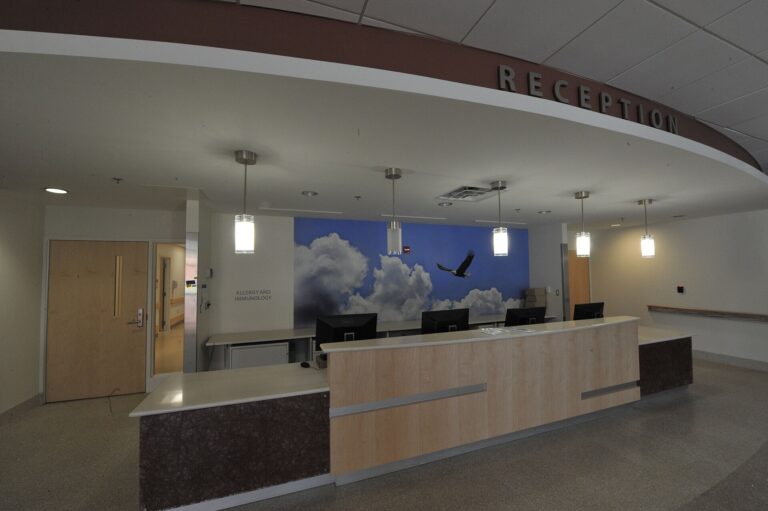

A medical office lease is usually the second-largest fixed cost a practice carries, right behind payroll, and it locks you in for seven to ten years or more.
To negotiate a medical office lease well, focus on the terms that actually move your money and your flexibility: the rent structure (gross versus triple net), the tenant improvement allowance that funds your build-out, the annual escalations, the pass-through operating costs, and the exit and assignment rights that protect you if you ever sell or relocate. Get those right and the headline rent per square foot matters far less than it first appears.
This guide walks through how a medical office lease is priced, the ten terms every practice owner should check before signing, and the red flags that quietly cost tenants the most. It is written for independent practices weighing their first space or a renewal, from a team that has negotiated and built out its own clinic space.

How is a medical office lease different from a standard office lease?
A medical office lease covers space built for clinical use, so it carries costs and clauses that a general office lease does not. Exam rooms need extra plumbing, dedicated electrical, reinforced flooring, lead-lined walls for imaging, medical gas, and HVAC that can handle both patient comfort and equipment loads. That build-out is expensive, which is why medical tenants sign longer terms and negotiate harder over who pays for the improvements.
Three features set a medical office lease apart:
- Higher build-out cost. A clinical fit-out runs well above a standard office fit-out per square foot, so the tenant improvement allowance becomes a central negotiation point.
- Longer terms. Landlords amortize a costly build-out over a longer lease, and practices want stability for referral patterns and patient habits, so seven to ten year terms are common (versus three to five for a standard office).
- Use and compliance clauses. Permitted-use language, exclusivity, ADA access, biohazard and sharps handling, and after-hours HVAC all show up in a medical office lease in ways they rarely do elsewhere.
How is rent on a medical office lease actually calculated?
Rent is quoted per square foot per year, but the square footage you pay for is not the square footage you use. Landlords bill on rentable square feet, which adds your share of common areas (lobbies, corridors, restrooms) on top of your usable space. The markup is called the load factor or add-on factor, and it commonly runs 10 to 20 percent. A suite with 3,000 usable square feet and a 15 percent load factor bills as roughly 3,450 rentable square feet, so always ask which number the quoted rate uses.
For a benchmark, the national average asking rent for medical outpatient space reached a record $25.40 per square foot in the first quarter of 2026, up 1.6 percent year over year, according to CBRE. CBRE does not state whether that average is quoted gross or triple net, so always confirm the quoting basis on any specific listing, and note that local rates vary widely, so property taxes, building insurance, and common area maintenance are billed on top of it, and local rates vary widely. Check the quoting convention too, because some markets quote rent per month rather than per year, so a listing at $4.25 can annualize to roughly $51 per square foot.
Base rent is only the starting point. What you owe each month also depends on the lease structure, which decides how much of the building’s operating cost lands on you.
Gross, modified gross, or triple net: which medical office lease are you signing?
The single biggest driver of your real occupancy cost is the rent structure. The same building can be quoted three ways, and a low base rent on a triple net medical office lease can cost more than a higher gross rate once you add the pass-throughs.
| Lease structure | What the tenant pays | Who carries operating-cost risk |
|---|---|---|
| Full-service / gross | One flat rent. Landlord covers taxes, insurance, and maintenance out of that rent. | Landlord (until a base-year reset) |
| Modified gross | Base rent plus some agreed costs; increases above a base year often pass through to the tenant. | Shared |
| Triple net (NNN) | Base rent plus a proportionate share of property taxes, building insurance, and common area maintenance. | Tenant |
Neither structure is automatically better. What matters is comparing offers on a total-cost basis, projecting the operating costs over the full term, and, on a triple net deal, capping how fast the pass-throughs can rise. A gross lease shifts cost risk to the landlord but usually carries a higher base rate; a triple net lease looks cheaper up front but exposes you to tax and insurance increases you do not control.
What is a fair tenant improvement allowance for a medical build-out?
The tenant improvement (TI) allowance is money the landlord contributes toward building out your space, quoted as dollars per rentable square foot. Because clinical construction is costly, the TI allowance is often the most valuable single item you negotiate in a medical office lease.
Landlord contributions for medical space vary widely, commonly falling somewhere between $50 and $150 or more per square foot depending on the specialty and the market, and a full clinical build-out frequently costs more than any allowance covers, leaving the balance for the tenant to fund or amortize.
When the build-out exceeds the allowance, landlords may offer amortized TI: they front the extra cost and you repay it inside the rent, with interest, across the term. That can preserve your cash at opening, but it raises your effective rent, so treat it as financing and compare the rate against your other practice financing options. The gap between allowance and true build-out cost is also a core line item when you model the cost to start a medical practice.
How should rent escalations be structured in a medical office lease?
Almost every medical office lease raises the rent each year. The escalation is usually a fixed percentage, commonly 2 to 3 percent annually, or it is tied to the Consumer Price Index. Fixed bumps are predictable, which helps you budget; CPI-linked bumps can spike in high-inflation years unless you negotiate a ceiling.
Ask for the escalation to apply to base rent only, not to the operating-cost pass-throughs, and push for an annual cap on any CPI formula. Over a ten-year term, the difference between a 2 percent and a 4 percent escalator compounds into real money.
The 10 medical office lease terms every practice should check before signing
Before you sign a medical office lease, work through this list line by line. Each item is negotiable, and each one has cost a real tenant more than they expected when it was skipped.
- Rent structure and base rate. Confirm whether the quote is gross, modified gross, or triple net, and get the operating-cost estimate in writing so you can compare offers on total cost.
- Term length and renewal options. Match the term to your plans, and secure written options to extend at a defined rate so a landlord cannot reprice you at renewal when you are least able to move.
- Tenant improvement allowance. Nail down the dollar amount, what it covers, who controls the construction, and what happens to any unused balance.
- Rent escalations. Fix the annual increase or cap the CPI formula, and apply it to base rent only.
- Operating-cost pass-throughs (CAM). On a triple net medical office lease, request a cap on controllable common area maintenance, exclude capital replacements, and ask for the right to audit the landlord’s expense statements.
- Exclusive-use clause. If you are the only practice of your specialty in the building, bar the landlord from leasing to a direct competitor next door.
- Personal guaranty. Landlords often want the owner personally on the hook. Negotiate a burn-off, where the guaranty ends after two or three years of on-time payment, or a cap on the total you can owe. In some markets, such as New York, a good-guy guaranty releases you once you vacate the space properly and stay current on rent.
- Assignment and subletting. This clause decides whether you can transfer the lease if you sell the practice or bring in a partner, so it is essential to any exit plan.
- Maintenance and repair. Spell out who is responsible for the HVAC, roof, and structure. Getting stuck with a failing rooftop unit can erase a year of savings.
- Exit, early termination, and holdover. Understand your options if you need to leave early, and check the holdover rate, which can jump to 150 percent or more of rent if you stay past the term.
What are the biggest red flags in a medical office lease?
A few clauses do disproportionate damage. Watch for these before you sign:
- Uncapped CAM. Open-ended operating-cost pass-throughs let a landlord bill you for capital projects and management overhead with no ceiling.
- Relocation or demolition clause. This lets the landlord move you within the building, or end the lease to redevelop, after you have spent heavily on a fixed clinical build-out.
- A full personal guaranty with no burn-off. An unlimited personal guaranty for the whole term puts your personal assets behind years of rent.
- No assignment right. If you cannot assign the lease, a buyer cannot take over your space, which can stall or sink a practice sale.
- Vague permitted-use language. Narrow use clauses can block you from adding services or ancillary lines later.

Should you use a tenant-rep broker or an advisor?
Yes. Landlords work with leasing brokers who represent the building’s interests, and the listing rate is only a starting position. A tenant-rep broker represents you, is typically paid from the existing commission pool rather than out of your pocket, and knows the concessions comparable tenants are winning. Pair that market knowledge with an operational review of how the space and its costs fit your budget. Rent is a permanent line on your practice management overhead, so the lease deserves the same scrutiny you give a payer contract.
How a medical office lease fits your practice finances
Occupancy cost usually runs a meaningful share of a practice’s total overhead, so the terms of your medical office lease shape your margin for years. The build-out gap, the escalations, and the operating-cost exposure all flow straight into your budget. Plan the funding before you sign: many practices cover the portion of the build-out above the TI allowance with working capital or a dedicated loan, and weigh equipment costs separately through buy, lease, or finance analysis rather than folding them into the real estate deal.
A lease is also a growth decision. If you are planning a second location, the terms you accept now set the template for how fast you can grow the practice, and a right of first refusal on adjacent space can make expansion far cheaper later. For practices opening their first location, the lease and the fit-out are two of the largest checks you will write, so treat them as one connected decision.
Frequently asked questions about medical office leases
How long is a typical medical office lease?
Medical office leases commonly run seven to ten years, longer than most general office leases, because landlords amortize the costly clinical build-out over more time and practices value the stability for their patient base. Shorter terms are possible but usually come with a smaller tenant improvement allowance.
What does triple net (NNN) mean on a medical office lease?
Triple net means you pay base rent plus your proportionate share of three operating costs: property taxes, building insurance, and common area maintenance. A low NNN base rate can end up costing more than a higher gross rate once those pass-throughs are added, so always compare offers on total occupancy cost.
Can I negotiate the tenant improvement allowance?
Yes. The tenant improvement allowance is one of the most negotiable and valuable terms in a medical office lease. You can push for a larger dollar figure, more control over the construction, and clarity on any unused balance. When the build-out exceeds the allowance, landlords will often amortize the difference into your rent, which you should evaluate as a financing decision.
Should I sign a personal guaranty for my practice’s lease?
Landlords frequently ask for one, but the terms are negotiable. Aim for a burn-off that ends the guaranty after a period of on-time payments, or a cap on the total you can owe. In some markets a good-guy guaranty is available, which releases you once you vacate the space properly and stay current on rent. An unlimited personal guaranty for the full term puts your personal assets at risk for years.
Do I need a broker to lease medical office space?
A tenant-rep broker is strongly recommended. They represent you rather than the landlord, are usually paid from the existing commission pool, and know the concessions comparable practices are securing. Pairing broker representation with an operational and financial review of the deal helps you avoid signing terms that quietly raise your cost of care delivery.
Get a second set of eyes before you sign
A medical office lease is a long commitment with a lot of moving parts, and most of the value is decided before you sign. Practice Management Consultancy is built by clinic operators who have negotiated and built out their own medical space, and we help independent practices pressure-test a lease against their real budget and growth plans. To talk through a lease you are considering, call (706) 909-3271 or reach us at contact@practicemanagementconsultancy.com. Explore our consulting services or get in touch to start the conversation.
Disclosure: the clinic in these examples is one our founder operates.